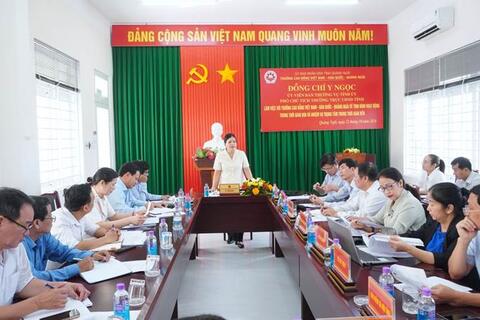


On October 22, Standing Vice Chairwoman of the Quảng Ngãi Provincial People’s Committee Y Ngọc met with Việt Nam–Korea–Quảng Ngãi College to review its recent operations and discuss key tasks for the coming period.
Scene of the meeting
Operating under the management of the Provincial People’s Committee, the college provides training at college, intermediate and primary levels, as well as continuing vocational training. It also conducts scientific research and technology transfer, cooperates with businesses, supplies skilled workers and provides driver training.
As part of organizational restructuring, the college reduced its subordinate units from 10 to eight and incorporated the Quảng Ngãi Transport Technical Training Center. It currently has 173 employees and operates two training campuses in the province.
In the 2025–2026 academic year, the college had 1,042 students across 48 college and intermediate-level classes, along with 142 learners in primary-level and continuing training programs. For the 2026–2027 academic year, it currently has 859 college and intermediate-level students and 65 primary-level trainees.
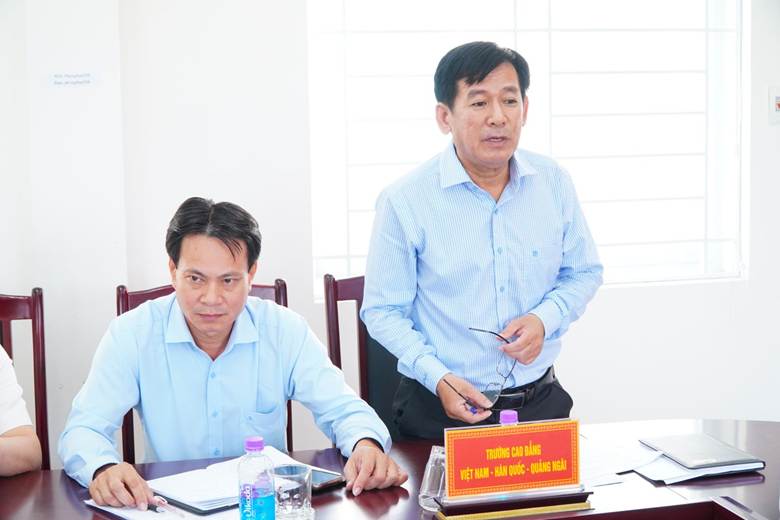
The college’s leader presents a report at the meeting
However, the college faces financial difficulties as enrollment and service revenues fall short of targets while salary-related expenses and training costs continue to rise.
Concluding the meeting, Standing Vice Chairwoman Y Ngọc acknowledged these challenges while pointing out shortcomings in the college’s management and administration. She stressed the need to resolve existing difficulties and help the college maintain stable operations, with the long-term goal of becoming a high-quality vocational training institution serving the province and the region.
She asked the college’s leadership to review its facilities and their use, reorganize the functions of departments and faculties, comprehensively assess teaching staff, and accelerate digital transformation in management and teaching.
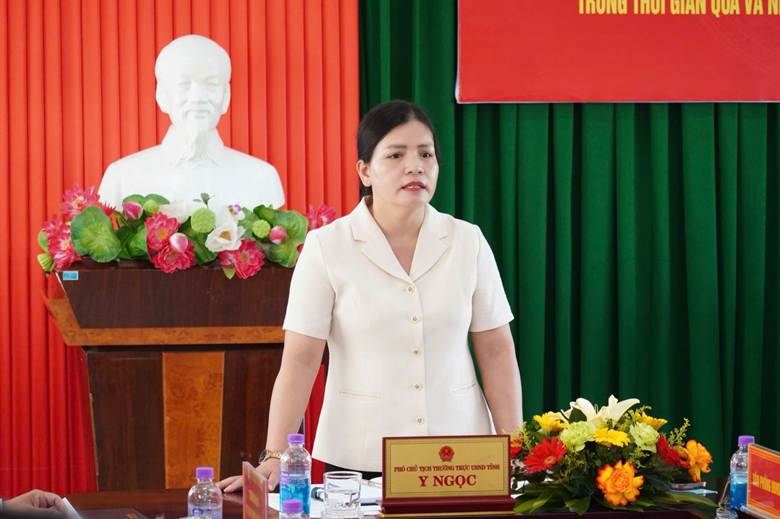
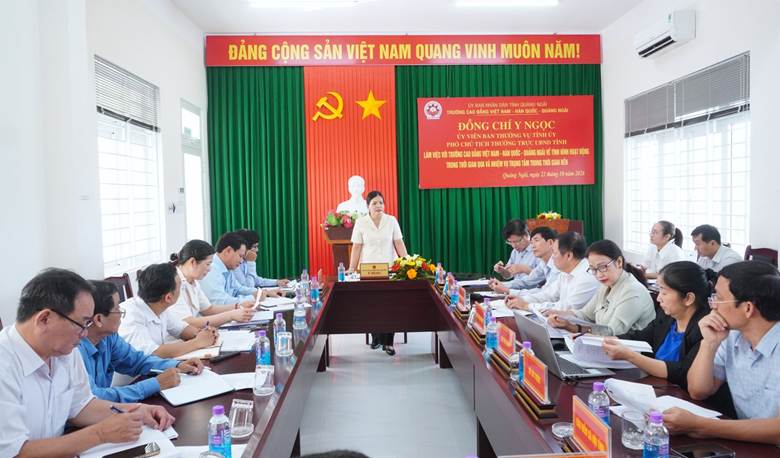
Standing Vice Chairwoman Y Ngọc speaks at the meeting
The college was also urged to focus on key vocational fields where it has strengths, carefully assess labor market and business needs before opening new courses, strengthen communications and brand promotion, expand training partnerships with other educational institutions, and work closely with businesses from training through workforce placement.
The Department of Finance was assigned to directly guide the college in resolving financial difficulties in compliance with current regulations. Relevant departments were also asked to continue providing support to help stabilize the college’s operations.
Minh Thiện