


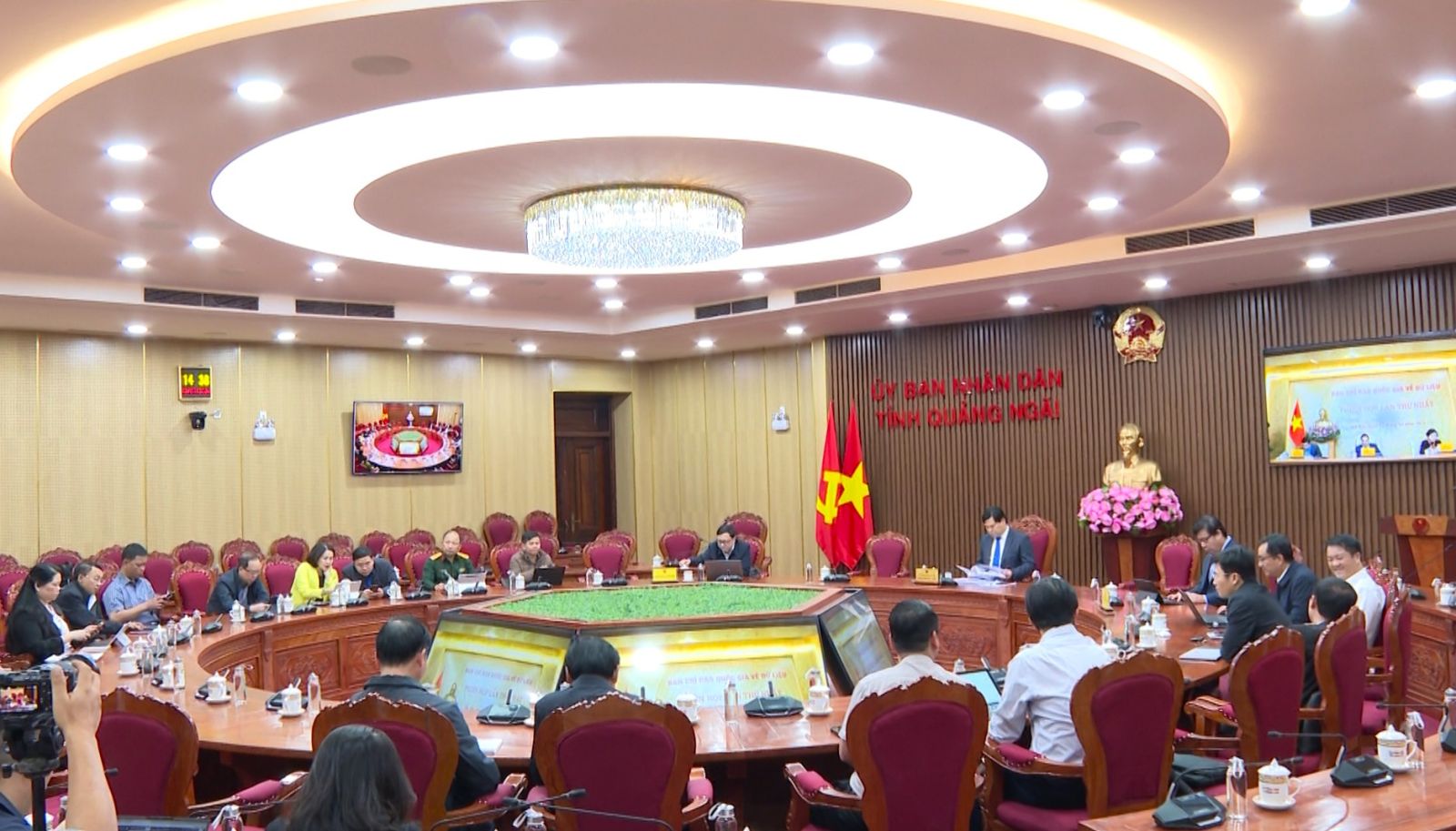
QUẢNG NGÃI — Vice Chairman of the Provincial People’s Committee Trần Phước Hiền on December 24 chaired a regular briefing to review the implementation of Politburo Resolution No. 57-NQ/TW, dated December 22, 2024, on breakthroughs in science and technology development, innovation and national digital transformation.
After one year of implementation, the resolution has delivered important results, laying a foundation for the next development phase.
Digital infrastructure has continued to expand, with 100 per cent of communes, wards and special administrative units covered by fibre-optic networks and nearly 98 per cent of villages able to access broadband Internet.
Provincial shared information systems and databases have operated stably, supporting direction and administration at all levels.
E-government and digital government development has recorded positive progress.
All provincial-level public services are now provided online; more than 74 per cent of applications are submitted online, with over 97 per cent processed on time.
The online conferencing system connects 96 communes, wards and special zones, while the provincial data integration and sharing platform has proven effective.
Essential digital services have been widely rolled out, particularly in healthcare, social welfare, cashless payments and public services.
The completion of electronic medical records at all healthcare facilities has enabled stronger health data connectivity.
Community digital technology groups have been established in all localities to support residents in accessing digital services.
At the meeting, the Department of Science and Technology presented a draft provincial digital transformation plan for 2026, setting specific targets across digital government, infrastructure and data, the digital economy and society, information security and human resources.
(10).jpg)
Concluding the meeting, Hiền stressed that implementing Resolution No. 57 is both an immediate and long-term task.
He required all departments and localities to develop a comprehensive five-year plan for 2026–2030, alongside annual plans aligned with provincial and central government orientations, and to allocate implementation funding early, no later than the first quarter.
M.H

.JPG)
.png)
.jpg)

.png)