

Chairman of the Provincial People's Committee Nguyễn Hoàng Giang visits and works with the German Energy Agency
BERLIN — Quảng Ngãi Province is seeking to strengthen cooperation with the German Energy Agency (DENA) to accelerate its energy transition, expand renewable energy development and promote sustainable industrial growth, as provincial leaders visited the organisation during an official working trip to Germany.
The provincial delegation was led by Nguyễn Hoàng Giang, Member of the Party Central Committee, Deputy Secretary of the Provincial Party Committee and Chairman of the Provincial People's Committee.
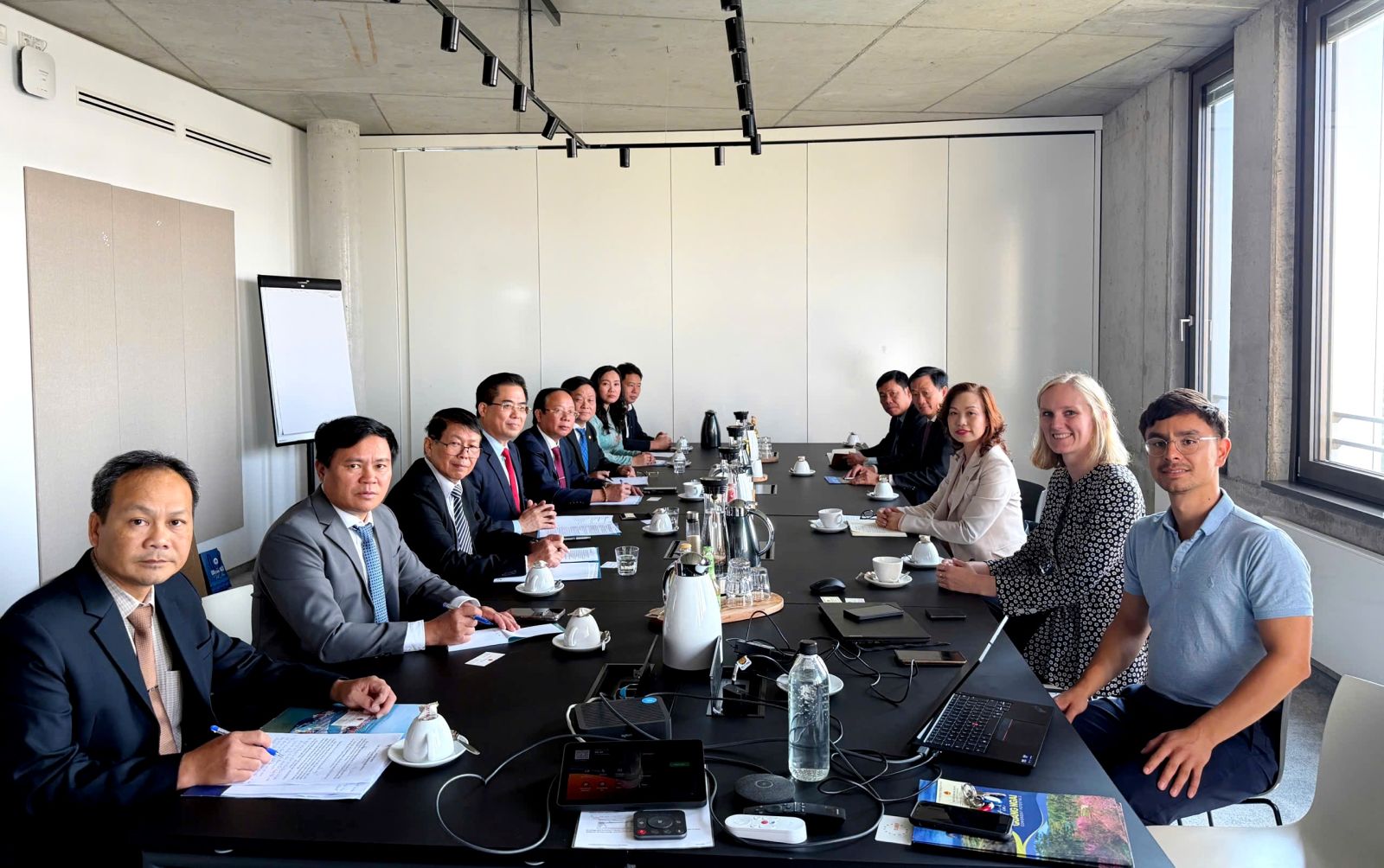
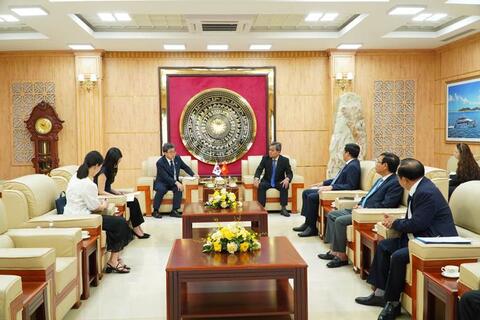
Meeting between Quảng Ngãi provincial leaders and the German Energy Agency
The delegation was received by Corinna Enders, Chief Executive Officer and Chairwoman of DENA's Executive Board.
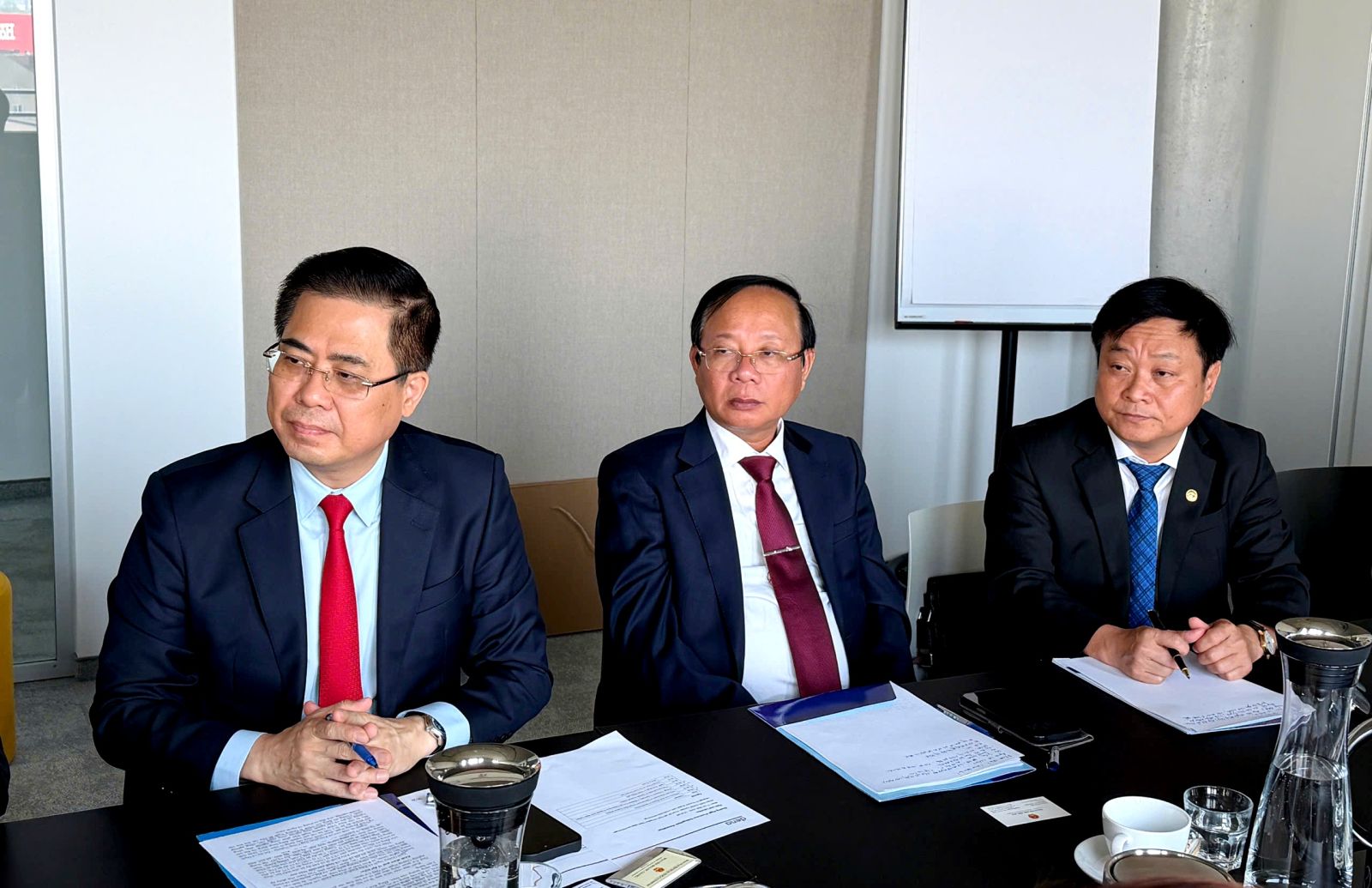
Chairman Giang highlights Quảng Ngãi's Investment Potential
During the meeting, Chairman Giang described DENA as one of Germany's leading organisations in energy transition, renewable energy, decarbonisation, energy security and sustainable energy infrastructure.
Established in 2000, the agency has played a key role in advancing Germany's energy transition while serving as a policy adviser to the Federal Government.
He said the meeting offered Quảng Ngãi an opportunity to gain deeper insights into DENA's expertise and explore future cooperation between the province, its business community and the German agency.
Introducing Quảng Ngãi's investment potential, Giang highlighted the Dung Quất Economic Zone, which covers more than 45,000 hectares and is planned as Việt Nam's national centre for oil refining and petrochemicals, energy, mechanical engineering, metallurgy and logistics.
The zone also benefits from the country's highest investment incentives in land use and taxation.
The economic zone currently hosts 440 valid investment projects with total registered capital of nearly US$19.5 billion, including 377 domestic projects worth almost US$17 billion and 63 foreign-invested projects valued at approximately US$2.5 billion.
Foreign investors come mainly from Japan, South Korea, Singapore, China, Taiwan (China), Hong Kong (China), Thailand, as well as several European countries including the United Kingdom, Germany and Austria, alongside the United States.
Giang also introduced the VSIP Quảng Ngãi Industrial, Urban and Service Park, a 1,700-hectare integrated development launched in 2013 to attract light manufacturing, supporting industries, high-tech production and green industries.
The province is now implementing the VSIP II Quảng Ngãi expansion to accommodate additional domestic and international investors.
He noted that Quảng Ngãi possesses significant advantages for developing heavy and light industries, renewable energy, agriculture, fisheries, tourism, seaport infrastructure and logistics services.
Dung Quất Port, capable of handling vessels of up to 200,000 DWT, provides a strategic advantage for industrial development and international trade.
With the ambition of becoming a major energy and industrial hub in central Việt Nam, Quảng Ngãi is prioritising investment projects in clean energy, renewable energy, energy infrastructure and green industrial development.
The chairman expressed his hope that DENA would help connect Quảng Ngãi with German energy enterprises, international organisations and investors while expanding cooperation on projects supporting net-zero emissions, green urban development, clean energy, renewable energy, energy security, technology transfer and workforce training.
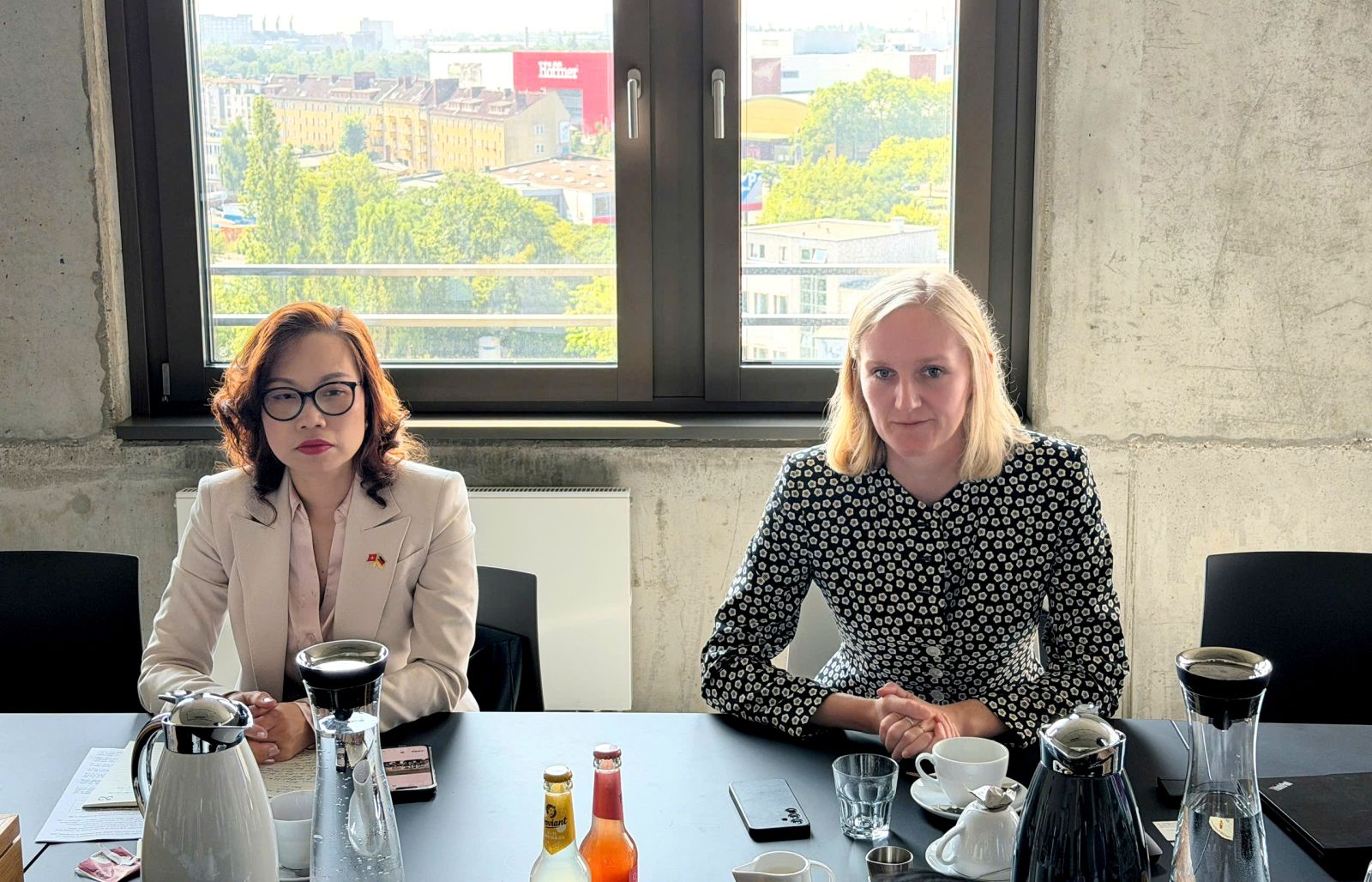
Corinna Enders, CEO and Chair of the Board of DENA, received and worked with the delegation.
DENA representatives said the agency is currently implementing two research programmes in Việt Nam focusing on energy-efficient building materials and advanced cooling solutions for buildings.
The initiatives aim to strengthen university education on energy-efficient construction while supporting the development of technical standards and regulations for energy use in the building sector.
DENA has worked closely with Hanoi University of Civil Engineering to transfer energy-saving technologies and best practices in construction.
It has also signed a memorandum of understanding with the Institute for Building Science and Technology Strategy under Việt Nam's Ministry of Construction to expand previous cooperation and provide professional training for engineers, architects and construction specialists.
Regarding Quảng Ngãi's proposals, DENA said it would study opportunities to cooperate with local universities and vocational education institutions in workforce development.
The agency also pledged to act as a bridge connecting the province's authorities, organisations and businesses with German energy companies.
Both sides agreed to organise an online workshop following the meeting to exchange further information, discuss specific areas of cooperation and identify practical next steps.
M.H