

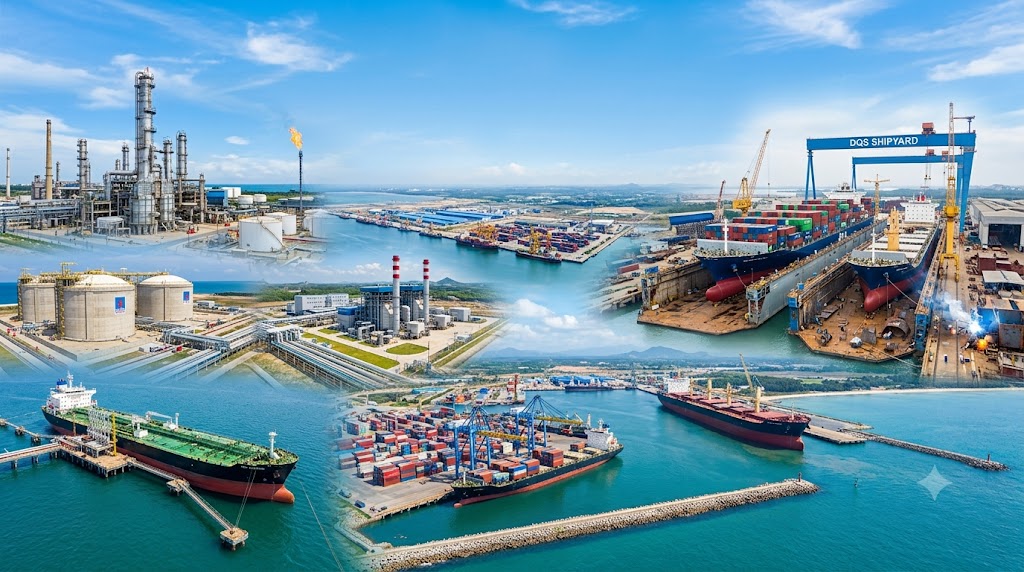
On October 17, the Party Central Committee’s Office issued a document conveying the Politburo’s directions on mechanisms and policies for developing the proposed hub.
At its meeting on October 16, after considering Proposal No. 128-TTr/DU dated October 15, 2026, submitted by the Government Party Committee and opinions from relevant agencies, the Politburo agreed in principle that Dung Quất Economic Zone could apply mechanisms and policies currently in place for free trade zones in Hải Phòng and Đà Nẵng, as well as the highest incentives available under the Law on Urban Development.
The Politburo assigned the Government Party Committee to coordinate with the National Assembly Party Committee to incorporate the proposal into the agenda and resolution of the second session of the 16th National Assembly. This would provide the basis for the Government to consider and decide on the specific mechanisms and policies applicable to the Dung Quất Economic Zone.
The policies must align with the Party’s guidelines and meet development requirements in oil refining, petrochemicals, shipbuilding, strategic reserves and national energy.
Strategic industrial base
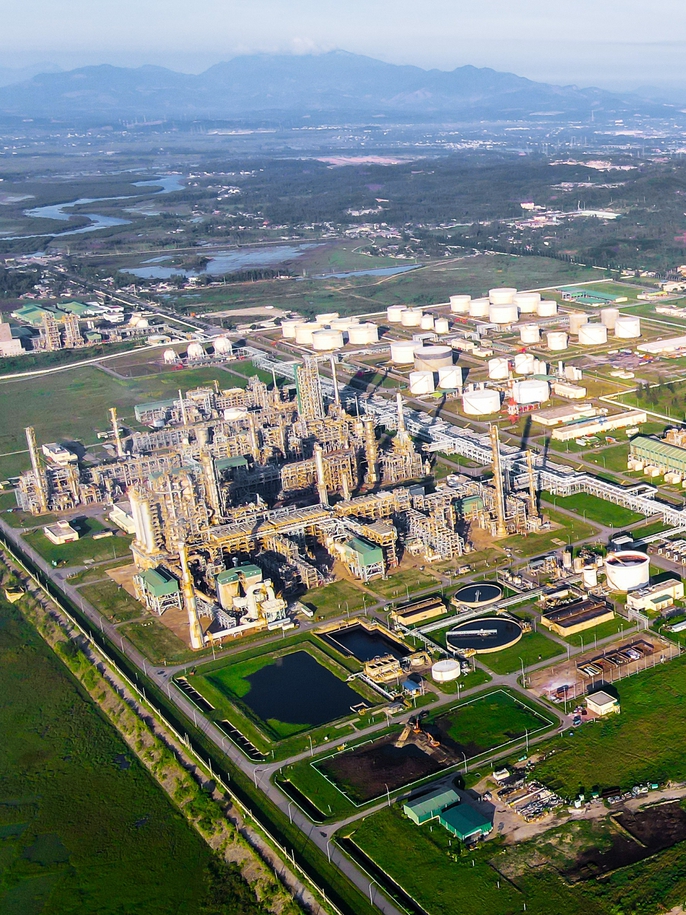
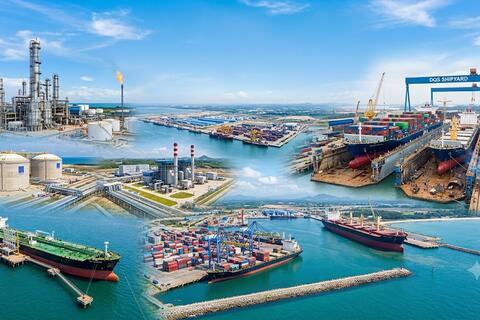
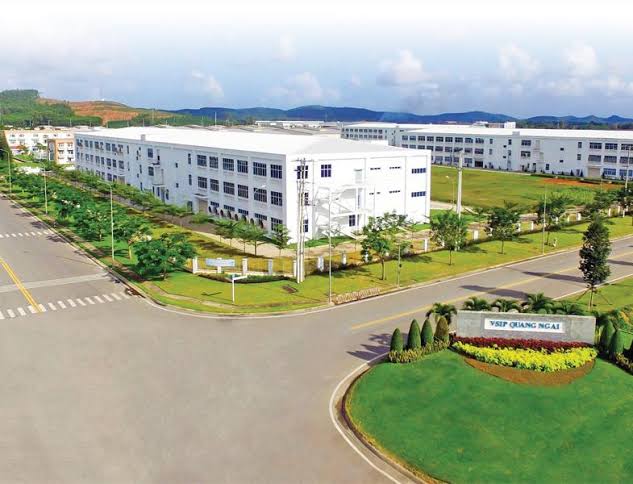
Dung Quất Economic Zone has a strategic location and relatively well-developed infrastructure, including a deep-water seaport, transport links, electricity and water supply systems, waste treatment facilities and supporting urban areas.
The zone is home to Dung Quất Oil Refinery, Việt Nam’s first oil refinery, which has laid the foundation for the development of the country’s refining, petrochemical, heavy industry and energy sectors.
It currently hosts 296 valid investment projects with total registered capital of VNĐ421.683 trillion (approximately US$19.27 billion). Of these, 217 projects are operational, with actual investment capital of around VNĐ282.457 trillion, equivalent to US$13.68 billion.
Industrial production value reached approximately VNĐ284.5 trillion in 2025, while the zone contributes around VNĐ27.774 trillion to the state budget annually.
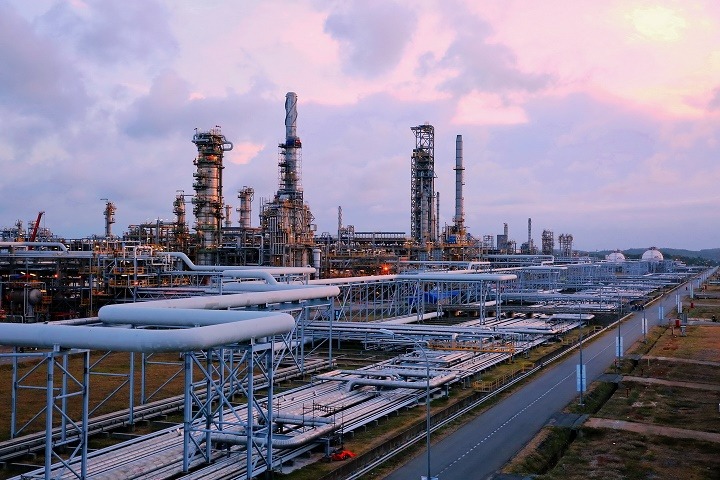
Dung Quất Oil Refinery has a processing capacity of 6.5 million tonnes of crude oil per year, meeting more than 30 per cent of the country’s petroleum demand.
Since beginning operations in 2009, the refinery has produced and sold more than 101 million tonnes of petroleum products, generating total revenue of over VNĐ1.8 quadrillion and contributing more than VNĐ245 trillion to the state budget.
Integrated development vision
The proposed hub is envisioned as an integrated industrial complex combining oil refining, petrochemicals, chemicals, shipbuilding and energy with supporting industries, logistics services and related sectors.
Appropriate mechanisms and incentives are expected to help address bottlenecks in investment, land use, planning, administrative procedures, technology and human resources.
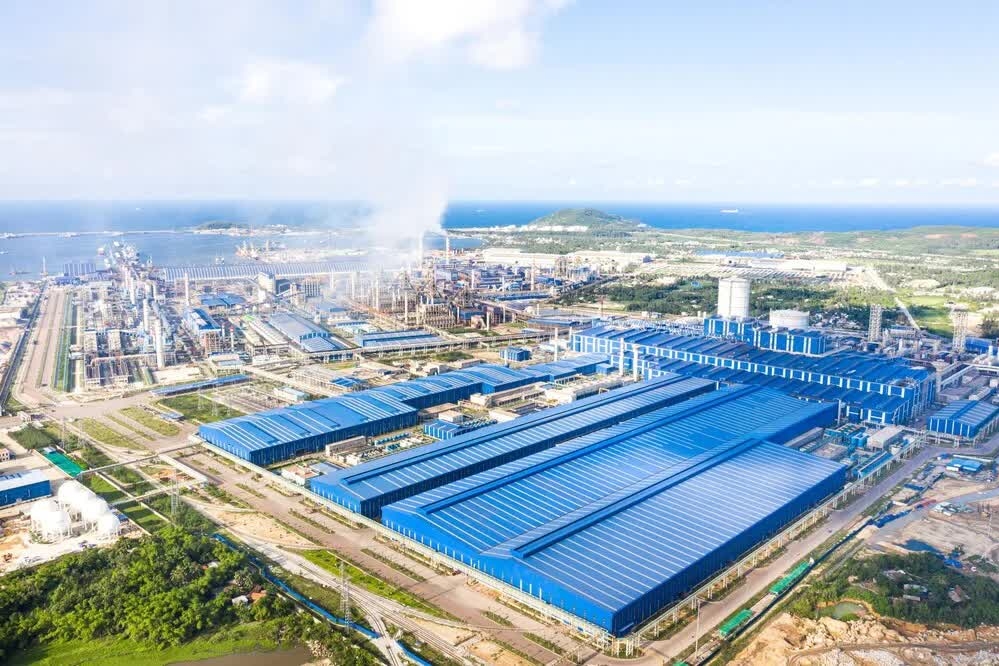
They are also intended to attract strategic investors, facilitate large-scale projects and promote the adoption of advanced technologies.
By 2030, the hub aims to meet all petroleum demand in the Central Highlands and central region and at least 30 per cent of national demand.
It also targets crude oil reserves equivalent to 20 days of production and petroleum product reserves equivalent to 20 days of consumption.
Total final energy output is projected to reach approximately eight million tonnes of oil equivalent.
The hub also aims to attract US$5 billion in domestic and foreign investment, contribute 30 per cent to Quảng Ngãi province’s economic growth and create 5,000 new jobs.
By 2045, it aims to attract US$50 billion in domestic and foreign investment and become an innovation centre for energy and materials.
The development is expected to strengthen competitiveness, drive socio-economic growth in Quảng Ngãi and the central region, and contribute to national energy security.
The Politburo’s in-principle agreement marks an important step towards completing the legal framework and advancing the next stages of development.
The initiative is expected to unlock Dung Quất Economic Zone’s potential, attract strategic investment, promote the energy industry and support economic growth in Quảng Ngãi and Việt Nam as a whole.
M.H