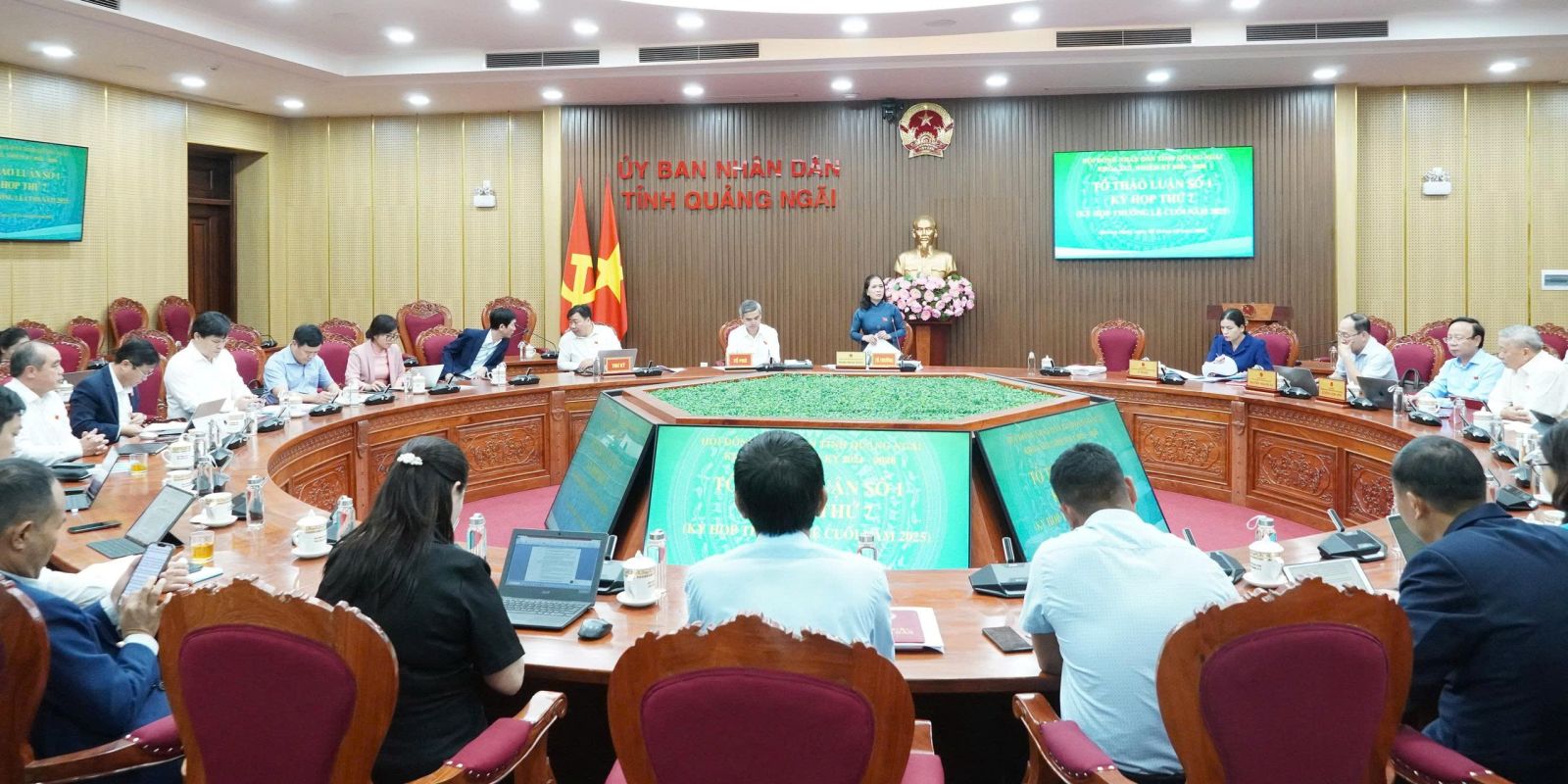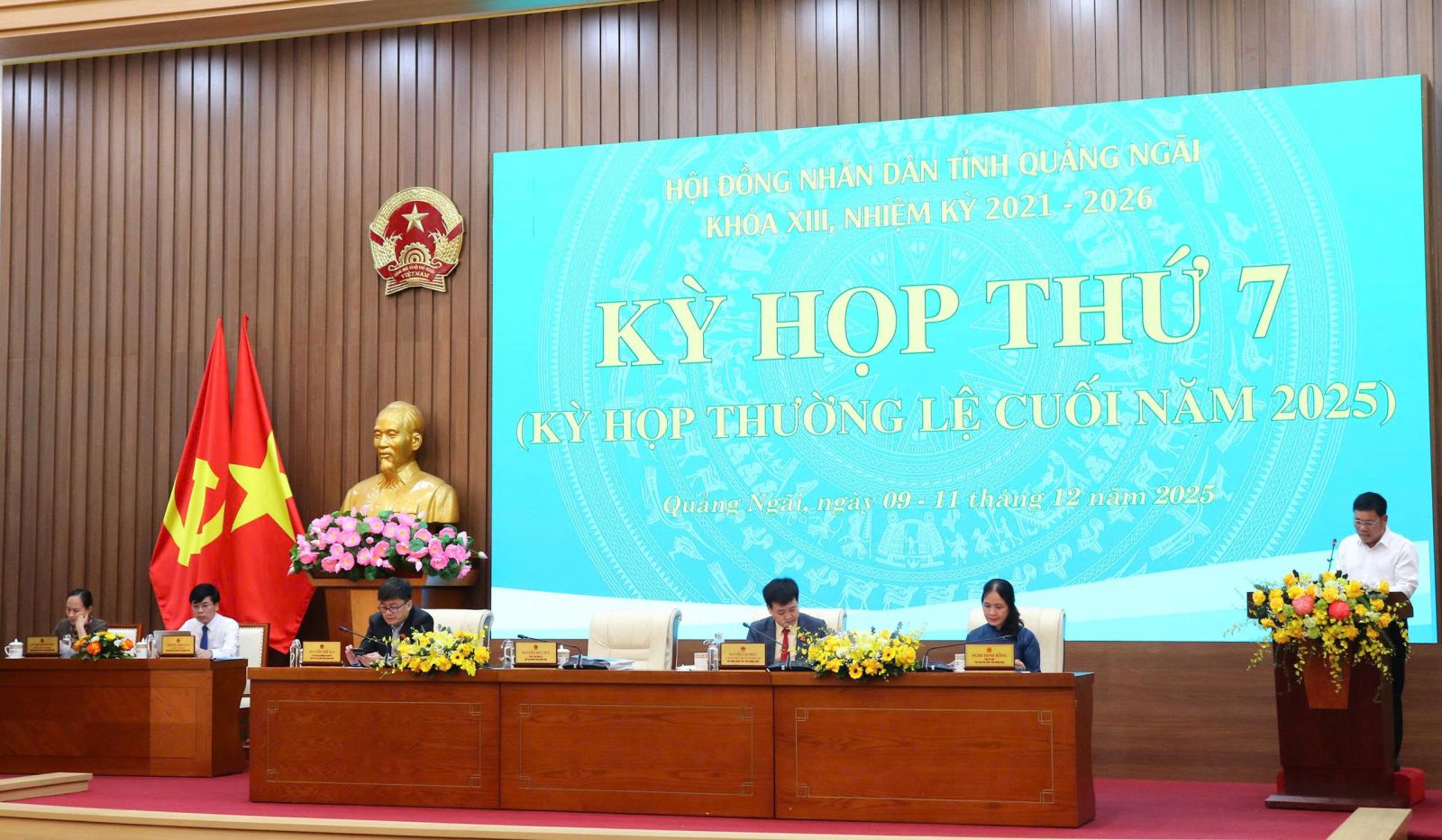


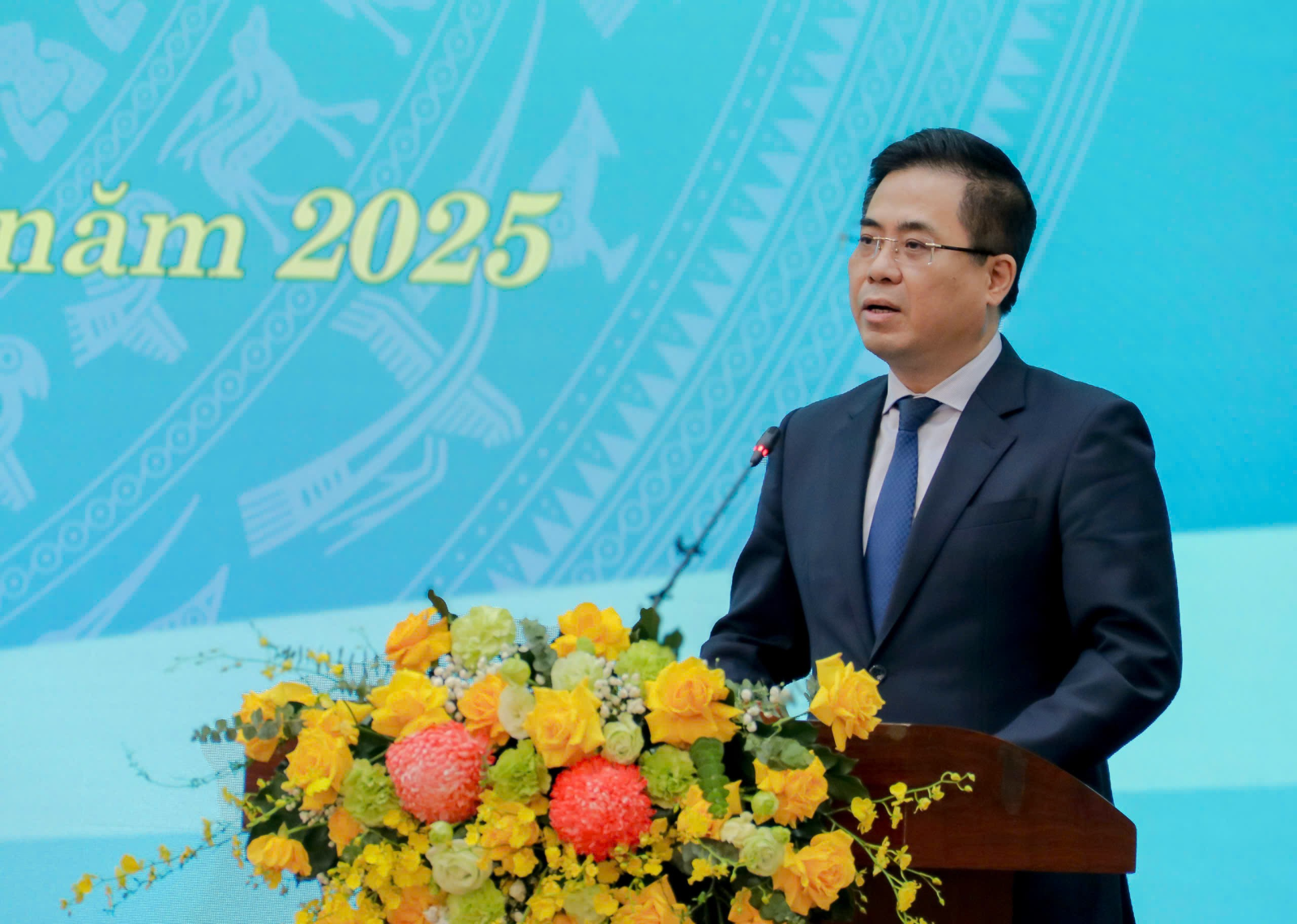
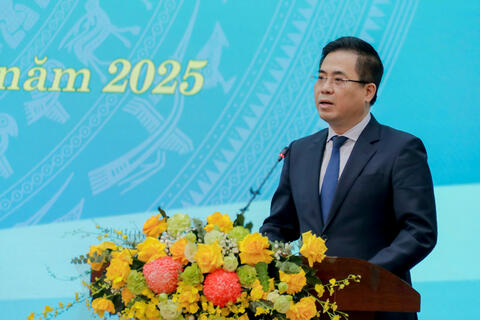
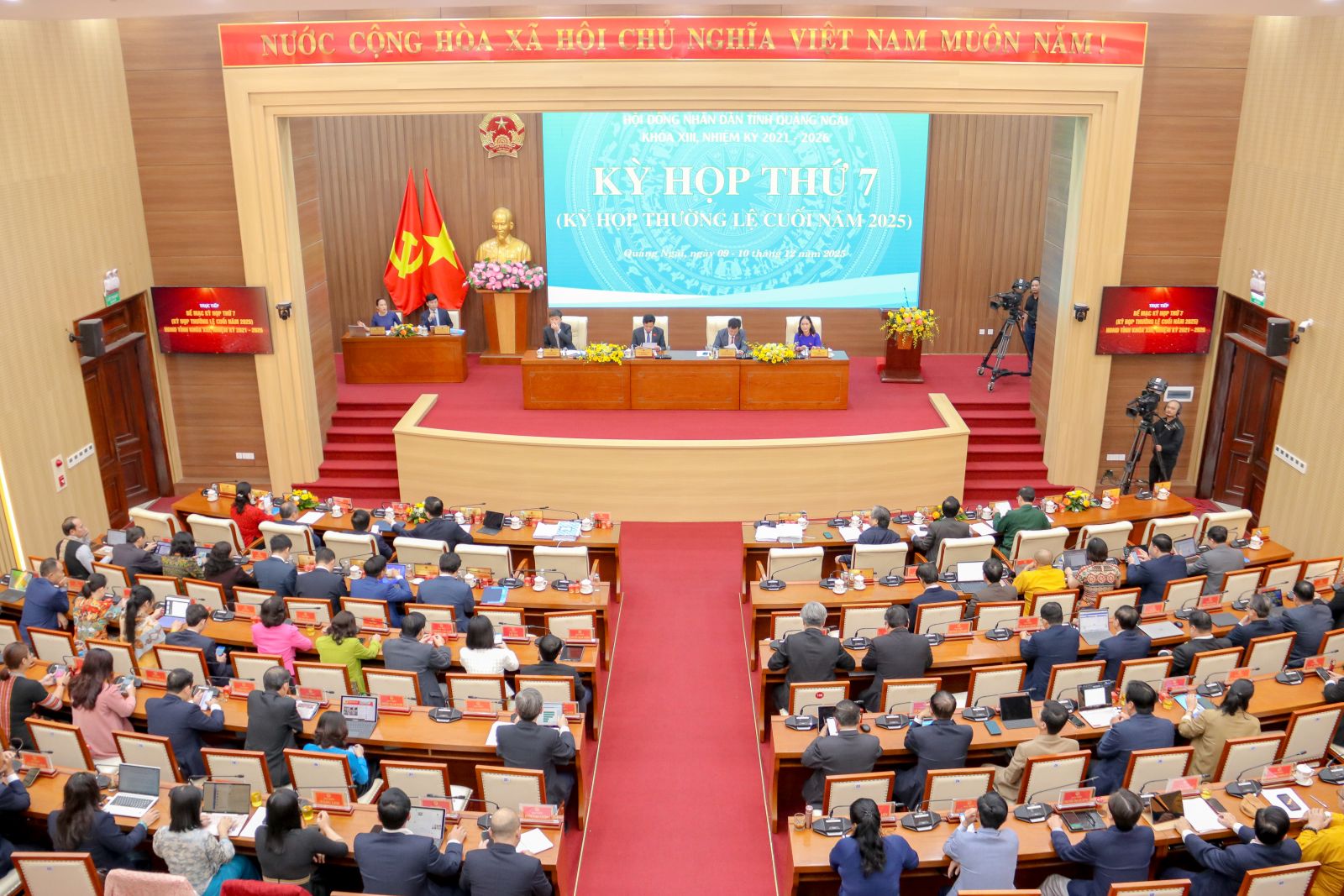
QUẢNG NGÃI — Addressing the 7ᵗʰ session of the 13ᵗʰ-tenure Provincial People’s Council on the afternoon of December 10, Deputy Secretary of the Provincial Party Committee and Chairman of the Provincial People’s Committee, Nguyễn Hoàng Giang, underscored that the council’s adoption of key reports and resolutions provides a critical legal foundation and strategic direction for the province’s socio-economic development.
He affirmed the provincial administration’s commitment to decisive leadership and innovative governance to achieve development targets and guide Quảng Ngãi toward becoming a fairly developed province by 2030.
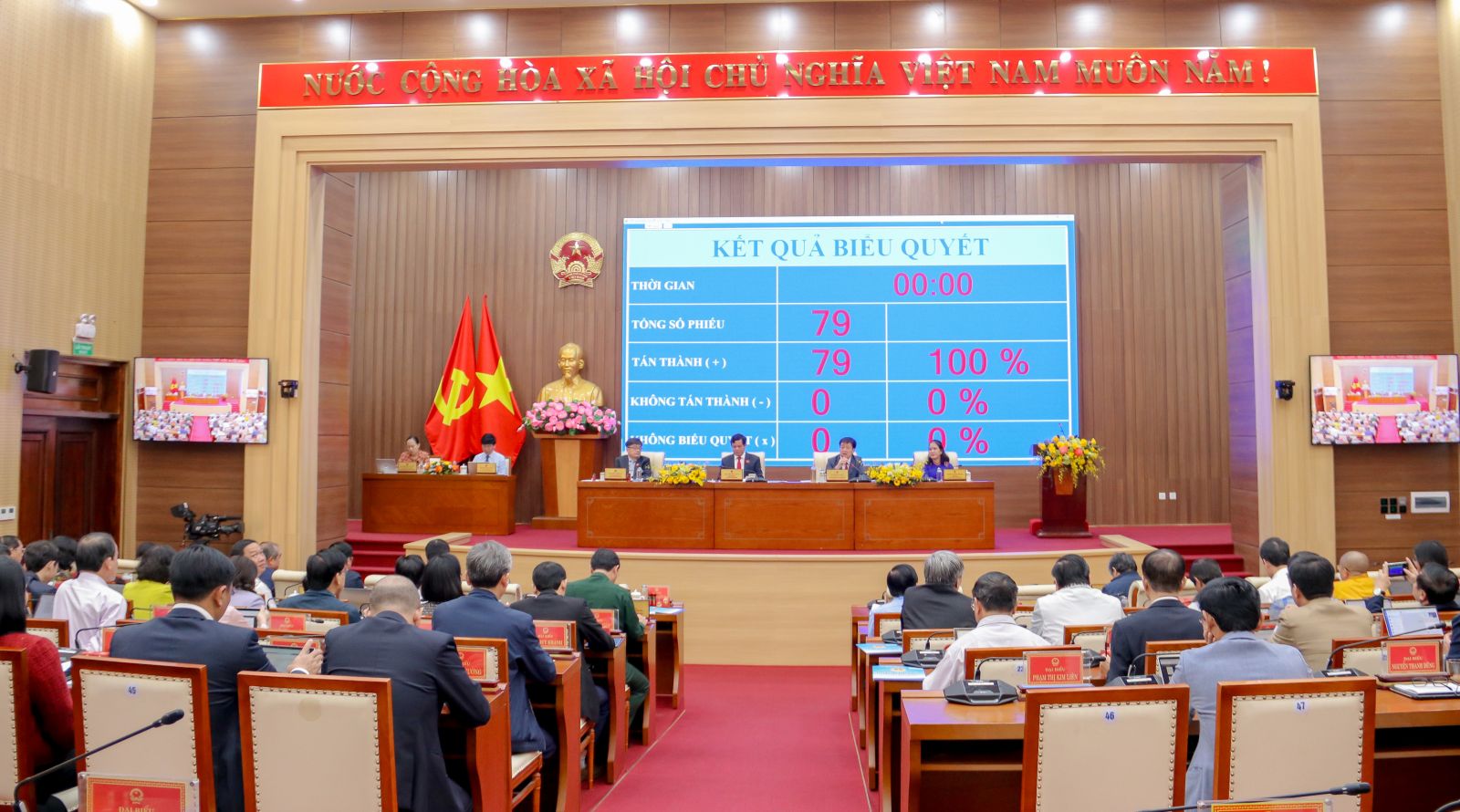
Giang noted that council deputies had democratically and responsibly reviewed and approved all reports and resolutions submitted by the Provincial People’s Committee, many of which are of significant importance.
These documents, he said, will enable synchronous and effective implementation of socio-economic tasks, financial and budget plans, and measures to ensure national defence and security in 2026 and throughout the 2026–2030 period.
According to the chairman, from early 2025, the provincial government took strong and timely actions to execute assigned tasks and address emerging issues, resulting in positive socio-economic performance across most sectors.
The province successfully fulfilled all 24 major development indicators set for 2025 under Resolution No. 26/NQ-HĐND dated August 22, 2025 — with six surpassing their targets — thereby essentially achieving the main goals of the 2021–2025 period.
As Việt Nam continues to accelerate reforms in economic restructuring, institutional improvement, digital economy development and administrative modernization, Giang stressed that Quảng Ngãi must undergo a more profound transformation.
Future development, he added, must focus not only on expanding scale but also on enhancing growth quality — shifting from “extensive” to “intensive” development, prioritising efficiency, sustainability, public satisfaction and international competitiveness.
.png)
Entering 2026 — the first year of a new development cycle — the chairman pledged decisive action from the outset.
He urged all sectors and levels to move swiftly and effectively to achieve the province’s 2026 targets and lay a solid foundation for fulfilling the objectives of the 2026–2030 socio-economic development plan set by the Provincial Party Congress.
He affirmed the province’s aspiration to become a fairly developed locality and an important growth pole in the Central and Central Highlands regions by 2030, with immediate priority placed on meeting and exceeding key indicators of the 2026 socio-economic development plan.
To achieve these goals, Giang called for strong implementation of the four pillar resolutions and three thematic resolutions of the Politburo; effective rollout of the two-tier local government model; greater decentralisation coupled with appropriate resource allocation; strengthened accountability and exemplary leadership; and tightened administrative discipline.
He also emphasised building a public service culture based on responsibility, professionalism and service.
Giang highlighted the need to enhance competitiveness and value-added growth; accelerate comprehensive digital transformation in administration and public services; build digital government, digital economy and digital society; and make breakthroughs in administrative reform and the investment environment.
He stressed the importance of developing modern and synchronised infrastructure, promoting urban development and new-style rural construction, and mobilising resources through public–private partnerships.
Key priorities include removing bottlenecks in infrastructure, land access and investment procedures; expediting planning processes; and accelerating land clearance to fast-track major transport infrastructure projects.
The chairman also called for strict natural resource management, environmental protection and climate resilience; improved living standards; timely delivery of policies for people with meritorious service; strengthened social welfare; and improved quality in education, healthcare and culture.
Maintaining national defence, security and social order, he added, will continue to provide a stable environment for development.
With a guiding spirit of “faster action — stronger commitment — more decisive implementation,” Giang affirmed that the province will concentrate resources, capitalise on opportunities, overcome existing shortcomings and resolve persistent bottlenecks to achieve the socio-economic targets set for 2026 and establish a firm foundation for the 2026–2030 period.
On behalf of the Provincial People’s Committee, he called on citizens, businesses and the entire political system to uphold solidarity, responsibility and determination, and to work together for the sustainable development of Quảng Ngãi.
M.H
.png)
.png)